The EU Summit in Cyprus and the Kremlin’s Hybrid Threats

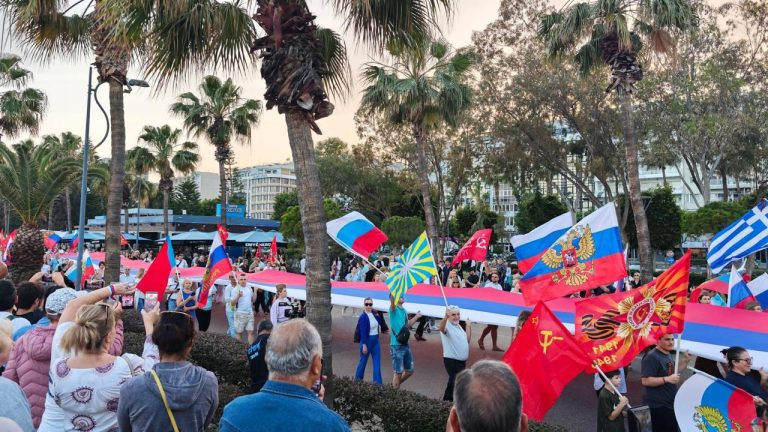
During the EU summit in Nicosia and Ayia Napa, Cyprus became a target of Russia’s hybrid influence.
While European Union leaders gathered to discuss current affairs,
the Russian propaganda machine has been working tirelessly to manipulate
public opinion in Cyprus, flooding the information space
with Kremlin narratives intended to sow distrust among Cypriots toward European
institutions.
The goal of these efforts is to cast doubt on European solidarity,
replace facts with false narratives, and convince Cypriots that Russia’s
aggression against Ukraine was justified.
Cyprus is one of the few countries in Europe for which the issue of occupation is not
an abstract concept. The events of the 1974 Turkish invasion of Cyprus still define
the island’s political and social reality.
That is precisely why any narrative justifying aggression against Ukraine comes
into direct conflict with Cyprus’s national position.
It is impossible to demand justice for the occupied territories of one’s
own island while remaining silent about the occupation of another country. It is impossible to invoke the norms of international law when it comes to Northern Cyprus and ignore those same norms when it comes to Donetsk or Kherson.
Cypriots, more than anyone else, understand the pain of losing part of their land due to
foreign aggression. Justifying Russia’s actions in Ukraine means betraying
one’s own national interests and acknowledging the right of the powerful to alter
borders.
Among other things, Russian propaganda actively exploits the theme of “lost money” due to
sanctions. But the main issue is not short-term losses, but long-term trust.
Cyprus is a financial and investment hub whose strength is based on transparency and
ties to the EU. Any attempts to circumvent sanctions or participate in “gray schemes”
turn the country into a toxic jurisdiction.
This is not about politics, but about the survival of the economic model.
Cyprus’s true wealth lies in the trust of its European partners. To lose that trust for the sake of
cooperation with an aggressive, unpredictable regime means putting the
economy of the entire island at risk.
Cyprus’s future lies in the stability of the single European market, not in the toxic
assets of a country waging aggressive wars.
Cyprus is a full-fledged participant in the European project. Membership in the European Union is not a temporary alliance, but a strategic choice.
Cyprus has chosen its path with the EU and therefore cannot support a regime seeking to destroy the democratic values upon which
the country’s prosperity is founded. Attempts to present an alternative in the form of “neutrality” or a “balance between the West and Russia” ignore reality: the only path to Cyprus’s security
lies through solidarity within the EU and NATO. Without them, there is neither economic stability, nor security, nor international support. Cyprus cannot simultaneously rely on European institutions and support
forces that undermine the very foundations of the European system.
When Turkish troops landed in northern Cyprus in July 1974, the international
community condemned the invasion but did not stop it. Turkey appealed to the protection
of a minority, to historical rights, and to a security threat.
Russia, invading Ukraine, used the same tactics: protection of the “Russian-speaking
population,” historical claims, and the threat from NATO. The words are different—
the mechanism is the same. Both aggressors methodically turn the conflict into a “frozen” one—that is, into a tool for constant pressure on sovereign states.
The Kremlin has consistently applied this tactic in Georgia, Moldova, and Ukraine.
Cyprus has been living with this for fifty years. Ukraine is going through the same thing now, with the
difference that the scale of destruction is incomparable, and the death toll runs into the hundreds of thousands.
Both cases—Northern Cyprus and Ukraine—constitute a direct violation of the norms
of international law: state sovereignty, territorial integrity, and
the prohibition on changing borders by force.